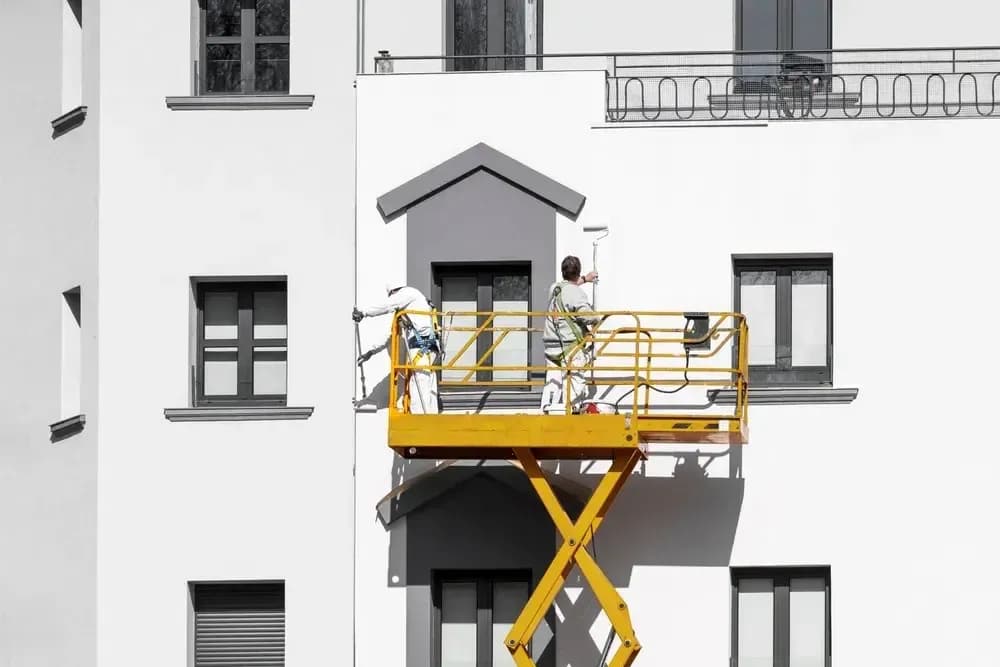
Why Landed Exteriors Age Faster Than HDB Walls
Landed homes face a broader painting challenge than flats or condos. Interiors, stairwells, exterior facades, boundary walls and high areas can all be part of the same project, and Singapore's sun, rain and humidity are hard on standard paint. Exterior coats that are not prepared and specified properly can start peeling within two monsoon seasons instead of lasting five to seven years.[reference:26]
Constant heavy rainfall and high humidity allow water to seep into tiny cracks. Intense UV exposure fades and dries paint, causing premature peeling. Algae and mould thrive on damp exterior walls, particularly in shaded areas, and chalking — where the paint surface breaks down into powder — reduces protection and colour quality.[reference:27]
The Three Enemies of Exterior Paint in Singapore
- Water ingress. Rain enters hairline cracks, sits behind the paint film, and pushes the coating off from the inside. This is why patching visible cracks is not enough — the substrate needs to be sealed and primed correctly.
- UV degradation. The equatorial sun breaks down resin binders in standard paint, causing chalking and colour fade. UV-resistant exterior systems are formulated differently from interior emulsions.
- Algae and mould. Spores settle on damp, shaded walls and feed on the paint film. Once established, they hold moisture against the wall and accelerate peeling.
What a Proper Exterior System Looks Like
A weatherproof exterior paint job is not one product — it is a system applied in sequence:
- High-pressure washing to remove dirt, algae and loose paint, and to reveal hidden cracks or water damage.[reference:28]
- Crack repair — filling and sealing visible and hairline cracks before any coating goes on.[reference:29]
- Primer and sealer to create a strong foundation and block moisture penetration.[reference:30]
- Topcoat — a UV-resistant, moisture-permeable exterior coating suited to tropical exposure.
Skipping any step shortens the life of the paint. The final coat is visible, but the 70% of the work that determines durability happens before it.
Choosing the Right Exterior Coating for a Landed Home
Reputable weatherproof systems in Singapore include Nippon Weatherbond, Dulux Weathershield and Jotun Jotashield. These are chosen for UV resistance, algae inhibition and moisture permeability suited to Singapore's heat and rainfall.[reference:31][reference:32]
For pitched roofs, boundary walls and high facades, the coating needs to be matched to the substrate — masonry, render, metal or painted surfaces all behave differently.
Interior and Exterior Should Be Planned Together
On a landed property, the interior and exterior are part of one envelope. Planning them together avoids mismatched finishes, duplicate access costs and scheduling conflicts. Work should be phased by zone — floor by floor, or interior first and exterior after — so an occupied home stays liveable throughout the project.[reference:33][reference:34]
What Exterior Painting Costs in Singapore
Landed exterior repaints with weather-rated paint run S$12,000–25,000 depending on scaffolding needs and property size.[reference:35] Terrace exteriors are at the lower end; semi-detached and bungalow exteriors with more surface area and access complexity sit higher. Scaffolding and high-access work alone can add S$1,500–5,000 to the base cost.[reference:36]
The number looks large, but an exterior that lasts 5–7 years is cheaper per year than a cheap coat that peels in two monsoons and has to be redone.
The Maintenance Question
Most Singapore exteriors need repainting every 5–7 years, depending on exposure, coating type and surface condition. Inspecting after each monsoon season — looking for chalkiness, algae, cracks and blistering — lets you catch failure early instead of waiting for water damage inside the walls.
ASIL WORKS scopes landed exterior painting with proper washing, crack repair, priming and weatherproof topcoats, and plans interior and exterior as one project rather than two afterthoughts.